
 UAE
UAE
 Qatar
Qatar
 Pakistan
 KSA
KSA
 Oman
Oman
 Kuwait
 Bahrain
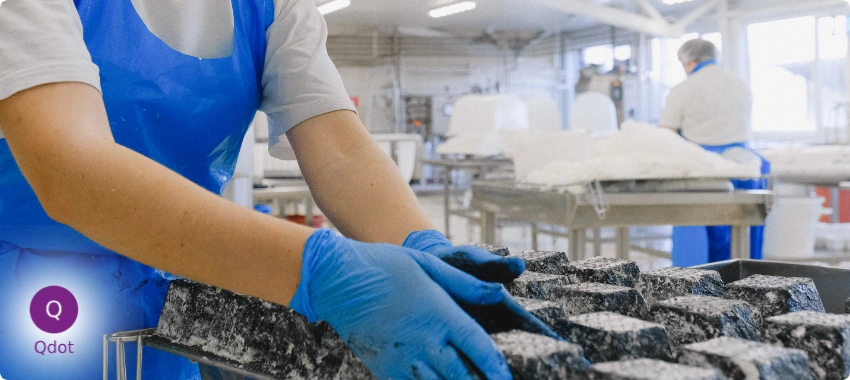
Build a controlled, compliant and audit-ready manufacturing system with Qdot’s GMP Consultancy in Saudi Arabia. We support manufacturers and regulated businesses in developing Good Manufacturing Practice systems that strengthen product quality, hygiene, process control, traceability, documentation, personnel competence and operational consistency.
Whether you are establishing a new manufacturing facility, upgrading an existing site, preparing for an SFDA inspection, addressing audit findings or pursuing GMP Certification in Saudi Arabia through an applicable authority or independent route, Qdot provides structured support from initial gap assessment through implementation and readiness verification.
Our consultants support organizations across Riyadh, Jeddah, Dammam, Al Khobar, Dhahran, Jubail, Yanbu, Makkah, Madinah, Qassim, Al Ahsa, Al Kharj, Tabuk, Hail, Jazan, Abha, Najran, Rabigh and Saudi Arabia’s major industrial cities.
- GMP gap assessment and compliance roadmap
- GMP documentation, SOPs and records
- Facility, workflow and contamination-control review
- Personnel hygiene and training systems
- Qualification, validation and calibration planning
- Deviation, CAPA and change-control systems
- Supplier and material control
- Internal GMP audits and inspection readiness
- Support for GMP Certification / regulatory readiness in Saudi Arabia
Planning GMP Certification in Saudi Arabia?
Speak with Qdot about your product category, manufacturing site, current GMP status and target inspection or certification objective.
What Is GMP?
Good Manufacturing Practice (GMP) is a structured set of requirements and controls used to ensure that products are consistently manufactured, handled and controlled to the quality level appropriate to their intended use. GMP goes beyond final-product testing: it focuses on how the product is made, the conditions under which it is made, the competence of personnel, the suitability of facilities and equipment, the control of materials and processes, and the reliability of records used to demonstrate compliance.
A well-implemented GMP system helps an organization reduce contamination, mix-ups, labeling errors, uncontrolled process variation, data-integrity failures, inadequate investigations, weak supplier control and other manufacturing risks that can affect product quality and consumer or patient safety.
Why GMP Matters in Saudi Arabia
Saudi Arabia continues to expand local manufacturing in pharmaceuticals, health products, cosmetics, food, chemicals and other strategic industries. For regulated manufacturers, GMP is therefore not merely a marketing credential; it can be a core part of regulatory readiness, customer qualification, market access and reliable production.
For medicinal products, the Saudi Food and Drug Authority (SFDA) publishes Good Manufacturing Practice guidance as part of the pharmaceutical quality framework. SFDA also maintains GMP-related certification services and guidance for other regulated product categories, including cosmetics and natural health products. The exact requirements, inspection route and certificate or approval mechanism depend on the product category and business activity.
Saudi compliance principle: GMP consultancy supports compliance readiness, but it does not replace SFDA facility licensing, product registration, regulatory inspections, marketing authorisations or any other statutory approval required for the applicable activity.
GMP Consultancy in Saudi Arabia
Qdot’s GMP Consultancy in Saudi Arabia is designed to turn regulatory and customer requirements into a workable system that people can follow on the production floor. Our approach begins with the real manufacturing process—not with generic templates. We assess facility layout, material and personnel flows, utilities, process controls, documentation, quality oversight, training, hygiene, traceability and risk points before developing the implementation plan.
The consultancy can be adapted for greenfield projects, operating factories, expansion projects, technology transfer, new production lines, contract manufacturers, organizations responding to inspection findings and companies that need a stronger system before pursuing GMP Certification in Saudi Arabia.
GMP Certification in Saudi Arabia
Organizations frequently search for GMP Certification in Saudi Arabia, but the appropriate route depends on what the organization manufactures and why the certificate is required. In some regulated sectors, GMP compliance is assessed within the competent authority’s licensing and inspection framework; in other cases, organizations may seek a formal GMP certificate or third-party assessment for customer, export or commercial purposes.
Qdot supports the preparation process: gap assessment, remediation planning, system development, implementation, internal audits, evidence review and readiness support. The final certificate, licence, inspection decision or regulatory approval is issued by the relevant authority or certification organization—not by Qdot.
Who Needs GMP Consultancy & Certification Support?
GMP requirements and expectations can apply differently across sectors. Qdot can tailor the implementation approach to the applicable product category, manufacturing risk and regulatory framework.
Pharmaceutical Manufacturers
Pharmaceutical GMP requires a mature pharmaceutical quality system, controlled manufacturing and quality-control processes, qualified personnel, suitable premises and equipment, validated critical processes, controlled documentation, deviation and CAPA systems, change control, complaints and recall capability, and robust batch records. Qdot can support pharmaceutical manufacturers in preparing these systems and closing identified GMP gaps before regulatory inspections or certification-related assessments.
Cosmetics Manufacturers
Cosmetics manufacturers need effective control over raw materials, formulations, hygiene, contamination risks, water and utilities where applicable, manufacturing instructions, filling and packaging, labeling, storage, complaints, traceability and release records. Qdot can support cosmetics businesses seeking stronger GMP controls and readiness for the applicable Saudi GMP certificate or inspection process.
Natural Health Products, Supplements & Related Regulated Products
Natural health products and supplement manufacturing can require sector-specific GMP controls covering identity, purity, contamination risk, supplier qualification, manufacturing records, packaging, labeling, storage and quality release. Qdot can adapt the GMP system to the applicable Saudi guidance and product classification.
Food, Beverage & Ingredient Manufacturing
Food-sector GMP normally works together with hygiene programs, prerequisite programs and HACCP-based food-safety controls. Qdot can help food, beverage and ingredient facilities strengthen GMP foundations such as personnel hygiene, cleaning and sanitation, pest control, zoning, equipment condition, material handling, allergen controls, traceability and records, and integrate them with HACCP or ISO 22000 where required.
Packaging, Contract Manufacturing & Supply-Chain Partners
Manufacturers of primary packaging, contract manufacturers, outsourced processors, laboratories, warehouses and suppliers supporting regulated industries may be expected to demonstrate controlled processes and GMP-compatible practices. The exact scope should be based on the product, contract and regulatory responsibilities of the organization.
Qdot GMP Consultancy Methodology
- Initial consultation and scope definition – understand the product category, site, processes, regulatory responsibilities, customer expectations and objective of the GMP project.
- GMP gap assessment – compare current practices against the applicable GMP requirements and identify critical, major and improvement gaps.
- Compliance roadmap – prioritize facility, process, documentation, training, validation and quality-system actions according to risk and project timeline.
- Facility and flow review – assess personnel flow, material flow, segregation, zoning, storage, cleaning, utilities and contamination or mix-up risks.
- Quality-system design – establish responsibilities, quality oversight, document control, deviations, CAPA, change control, complaints, recalls and self-inspection processes.
- GMP documentation development – prepare or refine policies, SOPs, specifications, master documents, forms, logs and records appropriate to the site.
- Production and material-control implementation – strengthen receiving, quarantine, status identification, dispensing, processing, in-process controls, packaging, labeling and release controls.
- Equipment, calibration, qualification and validation planning – define risk-based controls for equipment, instruments, utilities, cleaning and critical processes.
- Personnel competence and GMP training – train management, quality teams, production personnel, warehouse staff and other relevant functions on their roles.
- Implementation support – coach teams while procedures are used in practice and evidence is generated through real operations.
- Internal GMP audit and CAPA – conduct a pre-assessment, document findings, support root-cause analysis and verify corrective actions.
- Inspection / certification readiness – review objective evidence, conduct management readiness sessions and support the organization in preparing for the applicable external assessment.
Core GMP System Elements
Pharmaceutical / Manufacturing Quality System
Clear governance, management responsibility, quality oversight, quality risk management and periodic review.
Personnel & Training
Defined responsibilities, qualification, induction, role-specific GMP training, hygiene and ongoing competency.
Premises & Facility Controls
Suitable layout, zoning, access, material/personnel flow, cleaning design, environmental controls and maintenance.
Equipment & Utilities
Fit-for-purpose equipment, preventive maintenance, calibration, qualification and controls for critical utilities.
Documentation & Data Integrity
Approved SOPs, controlled forms, contemporaneous records, traceability, version control, secure data and good documentation practices.
Materials & Supplier Control
Approved suppliers, specifications, receiving, quarantine, sampling, status labeling, storage, issuance and reconciliation.
Production & In-Process Control
Defined instructions, line clearance, process parameters, yields, reconciliations, in-process checks and controlled deviations.
Validation & Qualification
Risk-based qualification and validation of facilities, equipment, utilities, processes, cleaning, computerized systems or methods where applicable.
Contamination & Cross-Contamination Control
Hygiene, cleaning, segregation, closed handling, zoning, changeover and risk-based contamination prevention.
Quality Control / Release
Sampling, testing, specification management, result review, out-of-specification handling and controlled product release where applicable.
Deviation, CAPA & Change Control
Structured investigation, root cause, corrective/preventive action, effectiveness checks and controlled changes.
Complaints, Defects & Recall
Complaint assessment, escalation, defect investigation, traceability and tested recall/withdrawal arrangements.
Self-Inspection & Continuous Improvement
Planned internal GMP audits, trend review, management follow-up and evidence-based improvement.
GMP Documentation We Can Help Develop
- GMP Quality Manual / site quality overview where appropriate
- Quality policy and organizational responsibilities
- Document-control and record-control procedures
- Personnel hygiene, gowning and training procedures
- Cleaning and sanitation procedures and records
- Pest-control and facility-maintenance controls
- Material receiving, quarantine, sampling, release and storage procedures
- Supplier qualification and approved supplier controls
- Production, batch / manufacturing and packaging instructions
- Line-clearance, reconciliation and labeling-control procedures
- Equipment operation, maintenance and calibration procedures
- Qualification and validation master planning
- Deviation, nonconformance and investigation procedures
- CAPA and effectiveness-check procedures
- Change-control procedure
- Complaint, quality-defect and recall procedures
- Traceability and status-identification controls
- Internal GMP audit / self-inspection procedure
- Data-integrity and good documentation practice controls
- Warehouse, temperature and distribution controls where applicable
The final documentation set should be proportionate to the organization’s sector, product risk, facility complexity and regulatory obligations. Qdot should avoid producing unnecessary paperwork that teams cannot sustain in daily operations.
GMP Consultancy & GMP Certification Across Saudi Arabia
Qdot provides GMP Consultancy in Saudi Arabia for organizations operating in major commercial centers, manufacturing clusters and industrial regions.
GMP Consultancy & GMP Certification in Riyadh
Riyadh hosts headquarters, pharmaceutical and healthcare businesses, food and consumer-product manufacturers, warehouses and growing industrial activity. Qdot supports GMP Consultancy in Riyadh for new and operating facilities requiring stronger quality systems, documentation, training and audit readiness. Organizations searching for GMP Certification in Riyadh can also engage Qdot to prepare the site for the applicable authority, certification or customer assessment.
GMP Consultancy & GMP Certification in Jeddah
Jeddah combines manufacturing, import, distribution, food, cosmetics, healthcare and Red Sea logistics. Our GMP Consultancy in Jeddah can cover facility controls, supplier and material management, production documentation, hygiene, traceability and readiness audits. For companies pursuing GMP Certification in Jeddah, we help build the evidence and implementation maturity needed before the relevant external assessment.
GMP Consultancy & GMP Certification in Dammam, Al Khobar & Dhahran
The Eastern Province supports manufacturing, healthcare, chemicals, logistics and energy-related supply chains. Qdot provides GMP Consultancy in Dammam, Al Khobar and Dhahran for regulated manufacturers and suppliers that need controlled processes, documented systems and strong quality oversight. We also provide GMP Certification readiness support for organizations preparing for regulatory, customer or independent assessment.
GMP Consultancy & GMP Certification in Jubail
Jubail is one of Saudi Arabia’s largest industrial centers, with chemical, petrochemical, packaging, support and manufacturing activities. Where businesses manufacture regulated products, packaging, ingredients or GMP-relevant inputs, Qdot can provide GMP Consultancy in Jubail focused on contamination control, material traceability, process control and quality systems. GMP Certification in Jubail support is tailored to the specific product and applicable certification or regulatory route.
GMP Consultancy & GMP Certification in Yanbu
Yanbu combines heavy industry, logistics, manufacturing and Red Sea access. Qdot supports GMP Consultancy in Yanbu for GMP-relevant manufacturers, food or consumer-product facilities and regulated supply-chain operations. Organizations seeking GMP Certification in Yanbu can use our gap assessment and readiness services to prepare documentation, records, personnel and facilities for external evaluation.
GMP Consultancy & GMP Certification in Makkah & Madinah
Makkah and Madinah have extensive hospitality, food, healthcare, warehousing and service supply chains alongside industrial activity. Qdot provides GMP Consultancy in Makkah and Madinah for suitable manufacturing and product-handling facilities, and GMP Certification readiness support where a formal GMP assessment is required by a regulator, customer or market.
GMP Consultancy & GMP Certification in Qassim & Buraidah
Qassim has strong food, agriculture, logistics and manufacturing activity. Our GMP Consultancy in Qassim and Buraidah can strengthen hygiene, supplier control, material handling, traceability, production controls and quality documentation. Qdot also supports businesses preparing for GMP Certification in Qassim where the applicable product or customer framework requires it.
GMP Consultancy & GMP Certification in Al Ahsa & Hofuf
Al Ahsa supports food, agriculture, manufacturing, warehousing and Eastern Province supply chains. Qdot provides GMP Consultancy in Al Ahsa and Hofuf to help businesses implement controlled manufacturing and hygiene systems, and supports GMP Certification readiness for organizations needing formal external evidence of good manufacturing practices.
GMP Consultancy & GMP Certification in Al Kharj
Al Kharj is an important manufacturing and food-production location near Riyadh. Qdot provides GMP Consultancy in Al Kharj for factories requiring stronger facility hygiene, process control, material systems, documentation and internal audits. We also support GMP Certification in Al Kharj preparation according to the applicable sector and assessment route.
GMP Consultancy & GMP Certification in Tabuk & Hail
Tabuk and Hail support growing food, agriculture, logistics and manufacturing activity. Qdot offers GMP Consultancy in Tabuk and Hail for organizations seeking consistent manufacturing controls and inspection readiness, together with GMP Certification support where third-party or regulatory evidence is required.
GMP Consultancy & GMP Certification in Abha & Khamis Mushait
In the Asir region, Qdot can support manufacturers, food businesses, healthcare-related suppliers and warehouses through GMP Consultancy in Abha and Khamis Mushait. Our GMP Certification readiness services focus on closing gaps, implementing procedures and building auditable records before external assessment.
GMP Consultancy & GMP Certification in Jazan & Najran
Jazan and Najran are expanding industrial, food and logistics locations. Qdot provides GMP Consultancy in Jazan and Najran for suitable manufacturing facilities and helps organizations prepare for GMP Certification through gap analysis, documented controls, training and internal auditing.
GMP Consultancy & GMP Certification in Rabigh
Rabigh supports industrial and logistics activity on the Red Sea corridor. For regulated or GMP-relevant manufacturers and suppliers, Qdot provides GMP Consultancy in Rabigh and preparation support for GMP Certification in Rabigh based on the applicable product sector and external assessment criteria.
GMP Consultancy & GMP Certification in Saudi Industrial Cities
Saudi Arabia’s industrial-city network supports pharmaceuticals, food, chemicals, packaging, consumer products, logistics and many upstream supply chains. GMP applicability should always be determined by the actual product and activity; the presence of a factory in an industrial city does not automatically make GMP certification mandatory. The location sections below are designed for businesses whose products, customers or regulatory obligations create a genuine GMP requirement.
GMP Consultancy & GMP Certification in Riyadh Industrial Cities
Qdot provides GMP Consultancy in Riyadh Industrial Cities for pharmaceutical, cosmetics, food, natural health, packaging and other GMP-relevant manufacturers. Support can include facility-flow review, SOP development, production controls, validation planning and internal audits. Businesses pursuing GMP Certification in Riyadh Industrial Cities can use the same implementation program to prepare for the applicable external assessment.
GMP Consultancy & GMP Certification in Jeddah Industrial Cities
Our GMP Consultancy in Jeddah Industrial Cities supports factories and regulated-product manufacturers with hygiene, material flow, contamination prevention, documentation, supplier controls and quality oversight. Qdot also supports GMP Certification in Jeddah Industrial Cities readiness for facilities preparing for regulatory, customer or independent audits.
GMP Consultancy & GMP Certification in Dammam Industrial Cities
Qdot provides GMP Consultancy in Dammam Industrial Cities for manufacturers serving pharmaceuticals, cosmetics, healthcare, food, chemicals and related supply chains where GMP controls are applicable. We also support GMP Certification in Dammam Industrial Cities through gap closure, evidence review and pre-assessment audits.
GMP Consultancy & GMP Certification in Sudair City for Industry and Business
Sudair hosts diverse manufacturing activity north of Riyadh. For pharmaceutical, consumer, food, packaging or other GMP-relevant businesses, Qdot provides GMP Consultancy in Sudair City for Industry and Business and GMP Certification readiness support tailored to the specific product and governing requirements.
GMP Consultancy & GMP Certification in Al Kharj Industrial City
Food and manufacturing operations in Al Kharj can benefit from structured GMP controls. Qdot provides GMP Consultancy in Al Kharj Industrial City covering hygiene, production, material controls, traceability, records and audit readiness, plus GMP Certification in Al Kharj Industrial City preparation where formal certification is required.
GMP Consultancy & GMP Certification in Qassim Industrial Cities
Qdot provides GMP Consultancy in Qassim Industrial Cities for food, ingredient, consumer-product, packaging and other relevant manufacturers. GMP Certification in Qassim Industrial Cities support focuses on practical implementation, internal verification and readiness for the chosen assessment route.
GMP Consultancy & GMP Certification in Al Ahsa Industrial City
Our GMP Consultancy in Al Ahsa Industrial City supports facilities needing improved manufacturing hygiene, raw-material control, process documentation and quality systems. Where required, Qdot also prepares organizations for GMP Certification in Al Ahsa Industrial City.
GMP Consultancy & GMP Certification in Madinah Industrial City
Qdot offers GMP Consultancy in Madinah Industrial City for food, health-related, packaging and other manufacturers with applicable GMP needs. GMP Certification in Madinah Industrial City readiness can include documentation review, facility checks, training and mock audits.
GMP Consultancy & GMP Certification in Jubail Industrial City
Jubail Industrial City includes major chemical and industrial supply chains. GMP may be relevant to selected manufacturers of regulated products, specialty inputs, primary packaging or materials supplied into pharmaceutical, food, cosmetics or healthcare sectors. Qdot provides GMP Consultancy in Jubail Industrial City and GMP Certification readiness where a genuine sector requirement applies.
GMP Consultancy & GMP Certification in Yanbu Industrial City
For GMP-relevant manufacturers and suppliers in Yanbu, Qdot can provide GMP Consultancy in Yanbu Industrial City covering quality systems, contamination control, traceability, training and documentation. We also support GMP Certification in Yanbu Industrial City preparation when required by the applicable market or authority.
GMP Consultancy & GMP Certification in Jazan City for Primary and Downstream Industries
Jazan’s industrial ecosystem includes primary and downstream manufacturing and logistics. For businesses producing GMP-relevant products, packaging, ingredients or regulated goods, Qdot provides GMP Consultancy in Jazan City for Primary and Downstream Industries and GMP Certification readiness support suited to the actual scope.
GMP Consultancy & GMP Certification in Ras Al-Khair City for Mining Industries
Ras Al-Khair is primarily a mining and heavy-industry hub, so GMP is not generally the main management framework for most operations. However, where a business manufactures controlled chemicals, materials or inputs supplied to regulated sectors, Qdot can assess whether GMP Consultancy in Ras Al-Khair is relevant and, where justified, support preparation for an applicable GMP Certification assessment.
GMP Consultancy & GMP Certification in King Salman Energy Park (SPARK)
SPARK is focused on the energy value chain, general manufacturing, chemicals and industrial services. GMP will only be relevant to selected tenants or suppliers whose products enter regulated manufacturing chains. Qdot can provide GMP Consultancy in SPARK for such organizations and support GMP Certification readiness where required by customer or product-sector criteria.
GMP Consultancy & GMP Certification in Other MODON Industrial Cities
Qdot can also support GMP Consultancy and GMP Certification readiness in Hail, Tabuk, Najran, Jazan, Rabigh, Asir, Hafr Al-Batin, Wa’ad Al-Shamal and other MODON industrial locations when the organization’s product, market or customer requirements make GMP applicable.
GMP for Key Manufacturing Sectors
Pharmaceutical & Biopharmaceutical
Pharmaceutical GMP projects can include pharmaceutical quality systems, batch documentation, data integrity, qualification/validation, contamination control, quality risk management, deviations/CAPA, change control, complaint/recall systems and inspection readiness.
Cosmetics & Personal Care
Cosmetics GMP can focus on raw-material approval, water and hygiene controls, mixing/filling processes, cleaning, packaging and labeling, traceability, complaints and release documentation.
Natural Health Products & Supplements
GMP support can cover identity and purity controls, supplier qualification, manufacturing records, contamination prevention, labeling, storage and release controls based on the applicable product classification.
Food, Beverage & Ingredients
GMP forms the operational foundation for hygienic food manufacturing and can be integrated with HACCP and ISO 22000. Typical controls include zoning, cleaning, pest control, personal hygiene, allergen and contamination control, material handling, traceability and maintenance.
Packaging & Printed Components
Primary packaging and printed materials used in regulated sectors require controlled specifications, supplier and change management, cleanliness, status identification, traceability and prevention of mix-ups.
Contract Manufacturing
Contract manufacturers need clear technical agreements, scope of responsibility, controlled transfer of information, batch documentation, change notification and quality oversight.
Warehousing & Distribution
Where storage and distribution are in scope, temperature control, segregation, traceability, status identification, handling of returns and distribution records should align with the relevant GDP/GSP/GMP expectations rather than being treated as production GMP alone.
Laboratories & Quality Control
GMP-related laboratories require controlled methods, qualified analysts, suitable equipment, calibration, reference standards, sample management, data integrity, investigation of atypical results and reliable records.
GMP, ISO 9001, HACCP & ISO 22000 - How They Fit Together
Organizations often operate more than one management or compliance system. The systems should be integrated where this improves control, but their purposes remain different:
- GMP focuses on controlled manufacturing practices and product quality / safety requirements applicable to a specific regulated or customer-defined sector.
- ISO 9001 provides a general quality management system framework for consistent processes and customer satisfaction across industries.
- HACCP focuses on systematic identification and control of significant food-safety hazards.
- ISO 22000 provides a certifiable food safety management system that integrates management-system elements, PRPs and HACCP principles.
- ISO 14001 and ISO 45001 can be integrated with GMP for environmental and occupational health & safety management without replacing GMP-specific product and manufacturing controls.
Qdot can design an integrated documentation architecture so organizations avoid duplicate procedures for document control, training, audits, CAPA, management review and supplier management while retaining sector-specific GMP requirements.
Preparing for GMP Certification / Regulatory Assessment
Typical Readiness Sequence
- Confirm the applicable GMP framework and certification / regulatory objective.
- Define product, site and process scope.
- Complete a detailed GMP gap assessment.
- Close critical facility, process and quality-system gaps.
- Implement controlled SOPs, forms and records.
- Train personnel and supervisors.
- Complete qualification / validation activities required by risk and regulation.
- Generate implementation evidence through real operations.
- Conduct internal GMP audits / self-inspections.
- Investigate findings and close CAPAs.
- Perform a final readiness review or mock inspection.
- Proceed with the applicable external inspection, authority process or certification assessment.
How Long Does GMP Implementation Take?
There is no single standard duration. A small operating facility with established quality controls may close gaps in a few months, while a greenfield pharmaceutical or complex regulated manufacturing facility may require a much longer program because premises, utilities, equipment qualification, process validation, laboratories, computerized systems, personnel and production evidence must all mature before inspection.
What Affects GMP Consultancy & Certification Cost?
- Product category and regulatory classification
- Number and size of sites
- Complexity of manufacturing processes
- Cleanroom / controlled-environment requirements
- Existing facility condition and flow
- Number of SOPs and records requiring development
- Validation and qualification scope
- Laboratory and testing responsibilities
- Number of employees requiring training
- Existing nonconformities or regulatory observations
- Need for on-site vs remote consultancy
- External authority / certification / testing fees, which are separate from consultancy
Qdot prepares project-specific proposals after reviewing the facility, scope, target framework and current readiness level rather than advertising one fixed GMP certification price.
Why Choose Qdot for GMP Consultancy in Saudi Arabia?
- Practical implementation approach focused on operating controls, not template-only documentation
- Support from initial gap analysis through external-assessment readiness
- Experience integrating GMP with ISO 9001, HACCP, ISO 22000, ISO 14001 and ISO 45001 systems
- On-site and remote support options across Saudi Arabia
- Structured training for management, QA/QC, production, warehouse and support personnel
- Risk-based approach to documentation, validation and CAPA priorities
- Support for new facilities, existing factories, expansions and remediation programs
- Clear distinction between consultancy and the independent regulatory / certification decision
Qdot helps organizations build the system, implement the controls and prepare the evidence. The final GMP certificate, licence, approval or inspection outcome remains the responsibility of the competent authority or applicable certification organization.
Start Your GMP Consultancy & Certification Readiness Project in Saudi Arabia
If your organization is planning a new regulated manufacturing facility, improving an existing factory, responding to audit findings or preparing for GMP Certification in Saudi Arabia, Qdot can help you build a practical roadmap from current-state assessment to implementation and readiness verification.
Our GMP consultants support organizations across Riyadh, Jeddah, Dammam, Al Khobar, Dhahran, Jubail, Yanbu, Makkah, Madinah, Qassim, Al Ahsa, Al Kharj, Tabuk, Hail, Abha, Jazan, Najran, Rabigh and Saudi Arabia’s major industrial cities.
info@qdot-ksa.com | / +966 55 152 2482 / +966 53 349 8921
FAQs
GMP Consultancy in Saudi Arabia is professional support to assess, design, document, implement and verify Good Manufacturing Practice controls applicable to a manufacturing facility. It can include gap analysis, SOP development, facility and process review, training, internal audits, CAPA and inspection readiness.
GMP Certification in Saudi Arabia can refer to a formal GMP certificate or documented compliance outcome issued through the applicable authority or certification route. The exact pathway depends on the product sector, business activity and purpose of the certificate.
No. Qdot provides consultancy, implementation and readiness support. The final certificate, licence, approval or regulatory inspection decision is issued by the applicable authority or certification organization.
GMP can be mandatory or regulatory-critical for specific product categories and manufacturing activities, particularly in regulated sectors such as pharmaceuticals. Requirements differ by product category, so the applicable SFDA and other regulatory requirements should be confirmed for each facility.
SFDA publishes Good Manufacturing Practice guidance for regulated products, including medicinal products, and maintains related regulatory and certification services. Organizations should identify the exact SFDA requirements applicable to their product and facility.
Yes. Qdot can support development and strengthening of pharmaceutical quality systems, documentation, deviations/CAPA, change control, validation planning, supplier controls, self-inspection and inspection readiness, subject to agreed project scope.
Qdot can support cosmetics manufacturers with GMP gap analysis, implementation, documentation and readiness for the applicable Saudi GMP certificate or external assessment. The certificate itself is not issued by Qdot.
Typical documents include quality-system procedures, SOPs, specifications, master manufacturing and packaging instructions, batch records, logs, training records, validation documents, deviations, CAPAs, change controls, supplier records and audit evidence. The exact set depends on sector and scope.
GMP focuses on manufacturing controls and product-quality requirements specific to regulated or customer-defined sectors. ISO 9001 is a general quality management system standard applicable to organizations across industries. They can be integrated but are not interchangeable.
GMP establishes hygienic and controlled manufacturing conditions, while HACCP systematically identifies and controls significant food-safety hazards. In food manufacturing, strong GMP and prerequisite programs are the foundation on which HACCP operates.
Yes. Food-sector GMP controls can be integrated into prerequisite programs and operating procedures under an ISO 22000 food safety management system.
The timeline depends on the organization’s readiness, facility status, product risk, validation requirements, availability of operating evidence and the external authority or certification schedule. A gap assessment is the best starting point for a realistic plan.
Costs vary according to sector, site size, complexity, number of products, current gaps, validation needs and the applicable external assessment route. Consultancy fees and external regulatory/certification fees should be treated separately.
Not necessarily. Existing facilities can often be upgraded, but suitability depends on layout, flows, surfaces, utilities, contamination risks, equipment and the applicable product requirements. Some gaps may require engineering changes.
Yes. Qdot can provide GMP Consultancy and GMP Certification readiness support in Riyadh, Jeddah and other major Saudi cities through a combination of on-site and remote services depending on project needs.
Yes, where the company’s product or customer requirements make GMP relevant. Qdot can support selected manufacturers and suppliers in Jubail, Yanbu, Riyadh, Jeddah, Dammam and other industrial cities.
Not automatically. A commercial third-party GMP certificate does not replace SFDA licensing, registration, inspections or regulatory requirements where those apply. The required evidence should be confirmed for the specific product and activity.
Begin with a scope-confirmation and GMP gap assessment. This identifies the applicable requirements, current compliance level, critical risks, facility changes, documentation needs, training needs and project priorities.