
 UAE
UAE
 Qatar
Qatar
 Pakistan
 KSA
KSA
 Oman
Oman
 Kuwait
 Bahrain
ISO standards provide internationally recognized frameworks that help organizations improve the consistency, safety, efficiency and control of their operations. In Saudi Arabia’s oil and gas sector, management-system standards can support organizations in strengthening quality, environmental performance and occupational health and safety across complex projects, facilities, contractors and supply chains.
Organizations seeking ISO certification should first implement the applicable management-system requirements and build evidence that the system is working effectively. Qdot supports Saudi organizations with implementation, documentation, internal audits, training and certification readiness. The final certification audit and certificate are handled independently by the selected certification body.
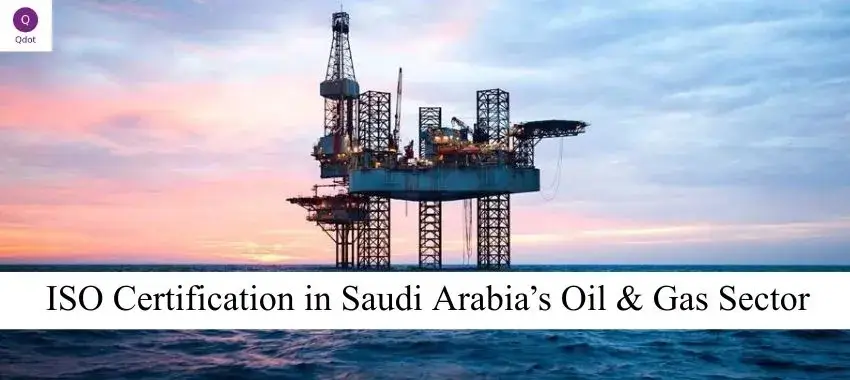
Benefits of ISO Certification in Saudi Arabia's Oil & Gas Sector
- Helps standardize critical processes and responsibilities across projects, facilities and contractor activities.
- Supports stronger quality controls, customer requirements and continual improvement through ISO 9001.
- Helps organizations identify environmental aspects, control impacts and improve environmental performance through ISO 14001.
- Supports systematic management of occupational health and safety risks through ISO 45001.
- Improves documented evidence, performance monitoring, internal audit and management review.
- Can strengthen customer, tender and supply-chain confidence where accredited certification is required.
How to Prepare for ISO Certification in Saudi Arabia
- Define the scope: identify the sites, activities, services, processes and organizational units covered by the management system.
- Conduct a gap assessment: compare current practices with the requirements of the relevant ISO standard.
- Develop and implement the system: establish policies, procedures, controls, responsibilities and records appropriate to the organization.
- Train employees and process owners: ensure relevant personnel understand their responsibilities and required controls.
- Verify effectiveness: complete monitoring, internal audit, corrective actions and management review.
- Prepare for independent certification: select a competent certification body and complete the applicable Stage 1 and Stage 2 audits.
ISO 9001 Certification
ISO 9001 Consultancy in Saudi Arabia helps organizations establish a structured Quality Management System (QMS) focused on consistent processes, customer requirements, performance monitoring, risk-based thinking and continual improvement. For oil and gas companies, contractors and suppliers, ISO 9001 can support stronger control over procurement, project delivery, operations, inspection, documentation and supplier performance.
ISO 14001 Certification
ISO 14001 Consultancy in Saudi Arabia supports organizations in developing an Environmental Management System (EMS) for identifying environmental aspects, understanding compliance obligations, setting objectives, controlling operational impacts and monitoring environmental performance. This can be particularly relevant to energy, petrochemical, industrial, construction and field-service operations.
ISO 45001 Certification
ISO 45001 Consultancy in Saudi Arabia helps organizations establish an Occupational Health and Safety Management System (OHSMS) for identifying hazards, assessing OH&S risks, controlling operational activities, improving worker participation and strengthening incident-prevention and continual-improvement processes. This is highly relevant to oil and gas environments where contractor management, field activities, maintenance, lifting, transport and industrial hazards require structured control.
FAQ's
ISO standards provide structured management-system frameworks for areas such as quality, environmental management and occupational health and safety. They can help oil and gas organizations improve process consistency, risk control, accountability, documented evidence and continual improvement.
No. Qdot provides ISO consultancy, implementation, documentation, training, internal audit and certification-readiness support. The certification audit, certification decision and certificate are handled independently by the selected certification body.
Management-system certification commonly operates on a three-year certification cycle with periodic surveillance audits, subject to the certification body's rules and continued conformity of the management system. Organizations must maintain and continually improve the system throughout the cycle.